
RestorativeDental Implants in Istanbul
Dental Implants
A dental implant replaces the root of a missing tooth and provides a foundation for a crown, bridge or denture. Whether implant treatment is appropriate depends on a careful clinical assessment.
- 07stages
- 06questions and answers
01About the treatment
What is it?
Losing a tooth can affect how you eat, speak and feel about your smile. Dental implants are one of the ways to replace missing teeth.
At Uslu Dental Clinic, implant treatment begins with a conversation and an examination rather than a fixed package. This page explains what implants are, how treatment is usually planned, and the benefits, limitations and risks you should weigh before deciding.
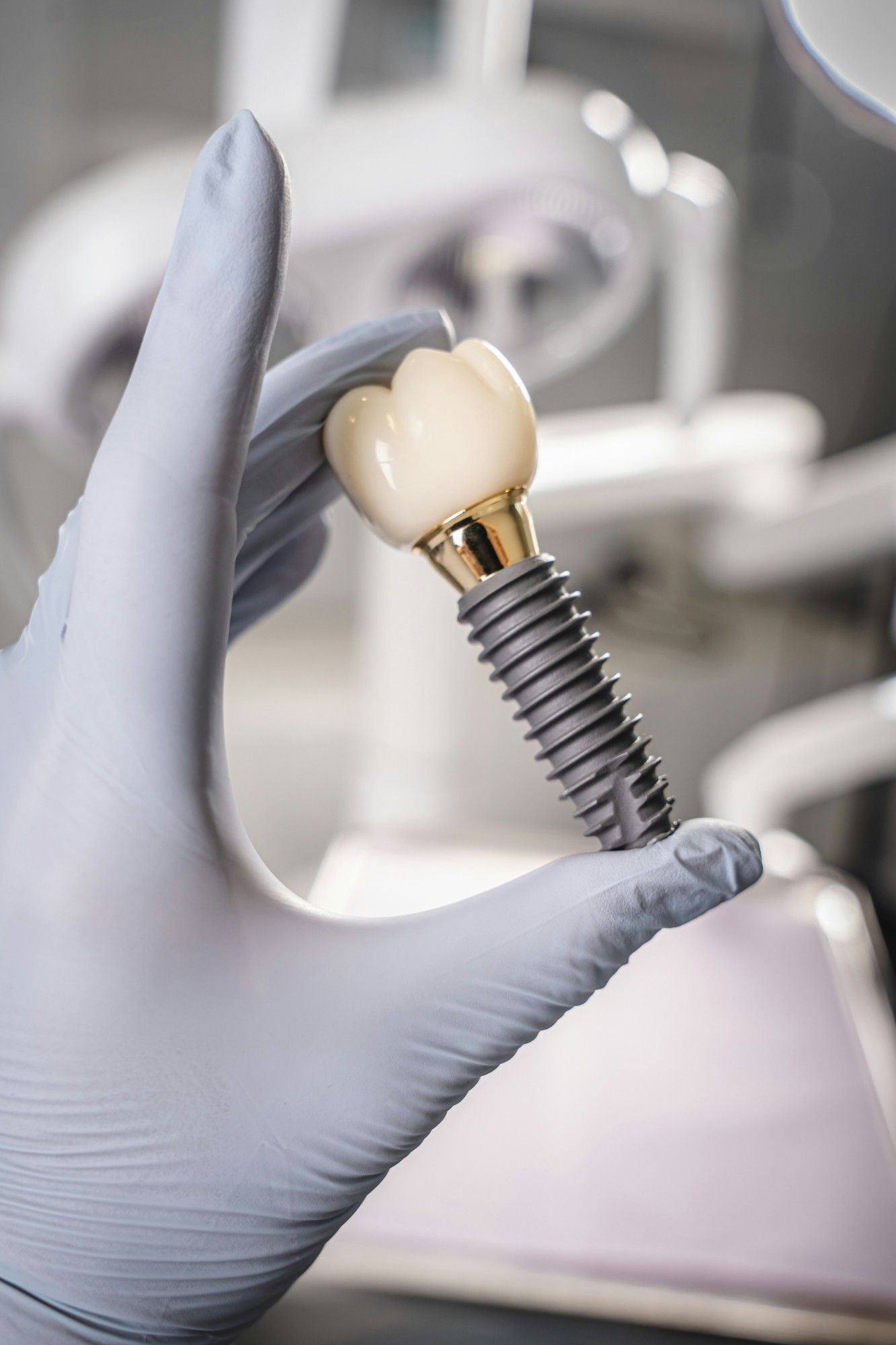
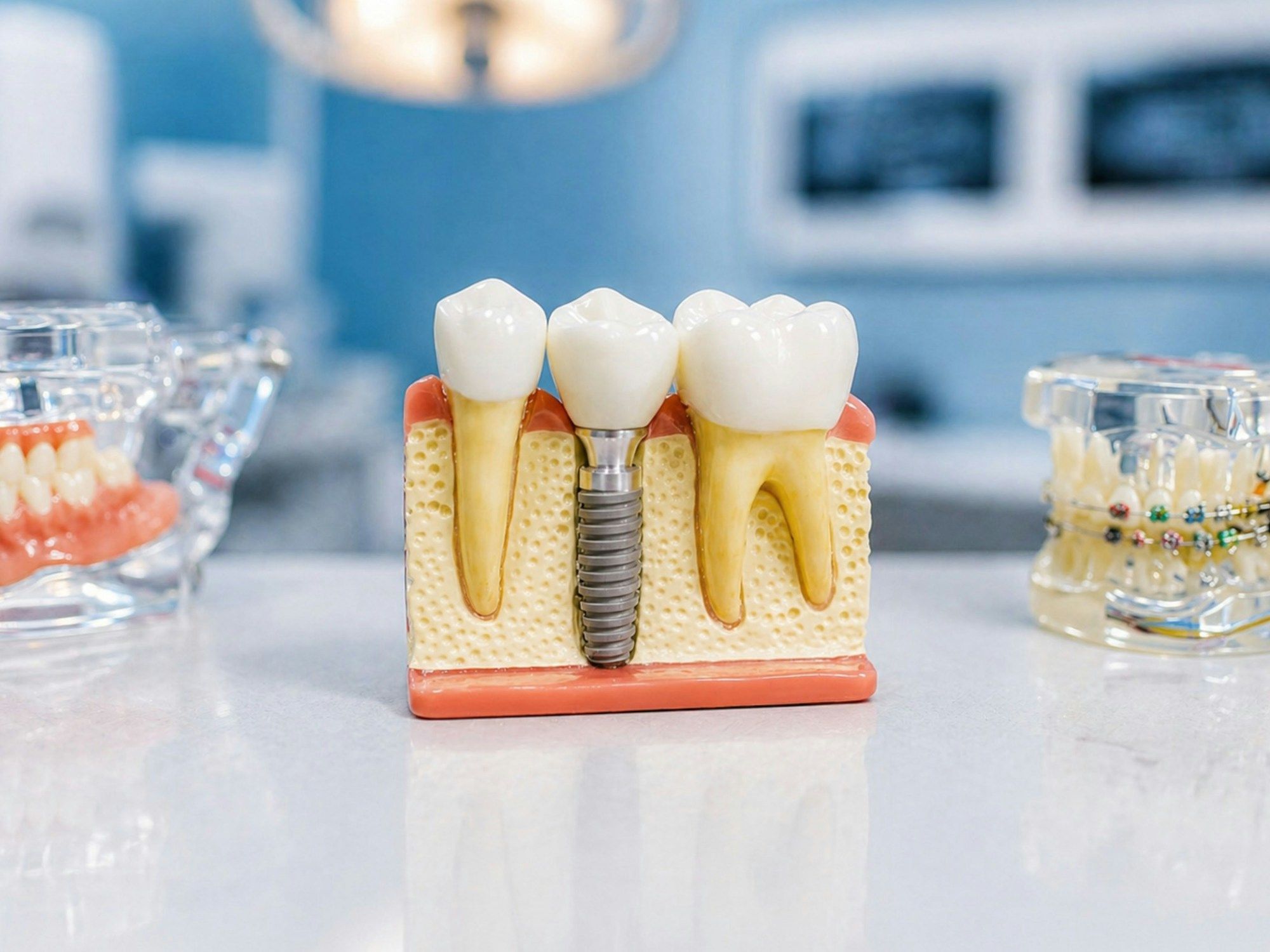
A dental implant is a small post, usually made of titanium or a titanium alloy, that is placed in the jawbone where a tooth root used to be. Ceramic (zirconia) implants also exist. Although the body of long-term research is larger for titanium, zirconia implants offer an aesthetic option for patients seeking a metal-free solution: they contain no metal, their tooth-coloured white material avoids a grey shadow showing through thin gums, and they are well tolerated by the gum tissues.
Over the following weeks or months, bone normally forms closely around the implant surface — a process called osseointegration. Once the implant is stable, a connecting component (the abutment) is attached and a restoration is made to fit on top.
Depending on the situation, implants can support a single crown, a bridge spanning several missing teeth, a full-arch fixed bridge, or a removable denture that clips onto the implants for added stability.
02Suitability
When might it be considered?
Implants may be considered when one or more teeth are missing or need to be removed. Whether they are suitable for a particular person depends on a range of factors that can only be assessed in a clinical examination.
- 01The amount and quality of bone available, which may have reduced since the tooth was lost
- 02The health of the gums and remaining teeth, including any history of gum disease
- 03General health and medication — for example uncontrolled diabetes, some bone-related medicines, or previous radiotherapy to the head and neck
- 04Smoking, which is associated with a higher risk of complications
- 05Tooth grinding or clenching, and the forces the restoration will need to withstand
- 06Your ability to keep the area clean and attend regular reviews
03Process
The treatment process
Every treatment plan is individual. The stages below describe a typical sequence, not a fixed protocol.
- 01
Consultation and examination
Your medical and dental history is reviewed and your mouth is examined. Radiographs are taken; a three-dimensional scan (CBCT) may be recommended where it will genuinely inform planning.
- 02
Treatment planning
The dentist explains the options available to you — including alternatives to implants — together with the expected stages, timescales, risks and costs, so that you can make an informed decision.
- 03
Preparatory treatment
Some people need treatment first, such as managing gum disease, removing a failing tooth, or bone grafting where there is not enough bone to support an implant.
- 04
Implant placement
The implant is placed in a minor surgical procedure, usually under local anaesthetic. A temporary restoration may be provided where appropriate.
- 05
Healing
The implant is left to integrate with the bone. This commonly takes from several weeks to a few months. In selected cases a restoration can be attached sooner, but this is not suitable for everyone.
- 06
Restoration
Once the implant is stable, impressions or a digital scan are taken and the final crown, bridge or denture is made and fitted.
- 07
Maintenance
Implants need the same daily care as natural teeth, together with regular professional reviews to check the gums, bone and restoration.
04Benefits and limits
Benefits and limitations
Potential benefits
- Replaces a missing tooth without relying on, or cutting down, the neighbouring teeth
- Provides a fixed option where a removable denture is not wanted
- Can make a removable denture considerably more stable
- A well-researched treatment with long-term clinical data
Limitations
- Requires surgery and usually several appointments over a number of months
- Not suitable for everyone; some people need bone grafting first
- Implants and their restorations require lifelong maintenance and may need repair or replacement
- Generally a more significant investment than some alternatives
05Risks
Risks and considerations
Implant placement is a routine procedure, and most people heal without significant problems. As with any minor surgery, some temporary swelling or tenderness in the first few days is normal.
Like all treatments, implants carry some possible risks — such as infection, or in rare cases the implant not integrating with the bone. Your dentist will assess these in relation to your own health and anatomy and discuss them with you before treatment, so that you can make an informed decision.
Good oral hygiene, not smoking and attending regular check-ups are the most important ways to keep your implants healthy for the long term.
06Aftercare
Recovery and aftercare
You will receive written aftercare instructions after surgery. These usually cover pain relief, a soft diet for the first days, how to keep the area clean, and avoiding smoking.
In the long term, careful brushing and cleaning between the teeth with interdental brushes or floss, together with regular professional reviews, are central to keeping implants healthy.
Implant treatment usually involves more than one stage, separated by a healing period. If you are travelling to Istanbul for treatment, please discuss the full timetable and follow-up arrangements before treatment begins.
07Common questions
Frequently asked questions
01Is implant treatment painful?
Implant placement is normally carried out under local anaesthetic, so the procedure itself should not be painful. Discomfort and swelling in the following days vary from person to person and are usually managed with pain relief recommended by your dentist.
02How long do dental implants last?
Systematic reviews report that the large majority of implants are still in function ten years after placement. This is not a guarantee for any individual: long-term success depends on general health, smoking, oral hygiene and regular maintenance, and the crown or bridge on top may need replacing over time.
03Can an implant be placed on the same day a tooth is removed?
Sometimes. Immediate placement can be considered when the bone and soft tissue are suitable and there is no active infection. In many cases a healing period after the extraction gives a more predictable result.
04How many visits will I need?
This depends on your individual plan. Most treatment involves at least two phases — placing the implant and fitting the final restoration — separated by a healing period, plus any preparatory treatment and reviews.
05Am I too old for dental implants?
Age alone is rarely the deciding factor. General health, medication, bone volume and the ability to keep the implants clean are more important. In young people, implants are usually delayed until jaw growth is complete.
06What is the difference between titanium and zirconia implants?
Most implants are titanium or titanium alloy and are supported by extensive long-term research. Zirconia implants are a metal-free alternative with a smaller evidence base. Your dentist can explain which system is proposed for your treatment and why.
08Other treatments
Related treatments
-
-
-
09Consultation
Discuss your options
Suitability for any treatment can only be determined after a clinical examination. If you would like further information, or to arrange an appointment, please contact the clinic.
Further reading
- Oral Health Foundation — Dental implants (opens in a new tab)
- Esposito M. et al. Interventions for replacing missing teeth: different types of dental implants. Cochrane Database of Systematic Reviews, 2014. (opens in a new tab)
- Howe M-S. et al. Long-term (10-year) dental implant survival: a systematic review and sensitivity meta-analysis. Journal of Dentistry, 2019. (opens in a new tab)